Thursday, October 22, 2015

The Pillars of the Earth


Rating: 4.8 Stars

Imagine a nice, tender meatloaf, lathered in creamy mushroom sauce with bits of sauteed portobello and garnished by a spring of dill. Sweet corn on the cob, shimmering under a thin film of melted butter, and some mashed potatoes with a touch of gravy. Cool, but not freezing iced tea, followed by a warm cup of milk tea.

This is Pillars of the Earth. A warm, simple, immensely satisfying meal, whose success boils down to a few key ingredients.

Firstly, Follet's prose really is to die for - solid and to the point. On one hand, he is the master of real-time narration. Walking along a street and fighting a battle are equally vivid in Pillars, because Follet packs every sentence with description. And not frivolous similes or metaphors, mind you, but straight up sensory description. On the other, he also excels at purely internal narration. He continually examines each character's decision-making process, all the while expertly weaving in exposition, foreshadowing, character development....And he contrasts the two - vivid sensory description and detailed internal dialogue - so well, that literally every part of the story becomes engaging. The end result being that pages of Tom sitting in a ditch are absolutely riveting (No literally, all he does is sit in a ditch). It's amazing.

Furthermore, this novel is just so damn realistic. Aside from the meticulously-researched portrayal of Medieval England, Pillars excels at showing human conflict. Each character fights tooth and nail to further his end, the result being an ever-shifting series of victories and defeats. And the genius of this realism is that it wears the reader down as much as the characters themselves - several times I found myself saying, "No, no, no. Please. Stop throwing things at 'em....let them win and be happy for once. Pleeease." Does it drag on? Yes. But you know what else drags on? Life's incessant obstacles. It would be a disservice to this book's sense of realism to cut corners by providing short and easy solutions. As a result, Pillars is a series of trial and error, gains and losses, mistakes and brilliance, that accurately reflects all human striving.

Next, characters. Vivid doesn't even begin to describe them. All are distinct, flawed, layered, subject to change - I could go on but put succinctly, these are some of the best characters in fiction. I especially adore and respect Tom and Phillip.Talented, kind, driven, and earthy - mmmmmmm.

Finally, the theme. Oh man, the theme. This is probably the closest a book can get to not having a theme and I could kiss it to death for that alone. Because you see, I think Follet sat down to write a really good story, and as is the case with all good stories the theme arose organically. We focus on the characters and before you know it we're four fifths of the way through the book, and it's still hard to discern a theme. Because like the good author he is, Follet doesn't tell us the theme, he shows it to us. Only at the very end, after completing an exhausting journey with all the characters does it crystallize:

Good people can sometimes win. 

Through dogged self-assurance, empathy, creativity, grit and years of sacrifice, normal people can dent the forces of evil. Whether they be heretical outlaws or devoted priors or simple stonemasons, good people are good people. And good people sometimes win.

And so we have the most fundamental, universal conflict - good and evil - played out against detailed analysis of sheep herding.

Gah, this book is just so GOOD.

Oh, and I should note that Follet does not bullshit around with "love conquers all, all you need is love". On the contrary, he underlines that creativity, perseverance, and hard work are a from of goodness, without which pure kindness is powerless. Goodness only matters if you can translate it to action.

Which is an important yet overlooked notion in fiction, and another reason this book is the shiz.

Alright, I've lost all structure. Here's one of my fave quotes:

"Powerless to stop those huge, red-faced, bloodthirsty men, he had conceived a blazing ambition to shackle all such swordsmen, to blunt their swords and hobble their war-horses and force them to submit to another authority, one higher than the monarchy of violence. And moments later, as his parents lay dead on the floor, Abbot Peter had come in to show him the way. Unarmed and defenseless, the abbot had instantly stopped the bloodshed, with nothing but the authority of his Church and the force of his goodness...Until this moment he had believed that he and people like him were winning. They had achieved some notable victories in the past half century. But now, at the end of his life, his enemies had proved that nothing had changed. His triumphs had been temporary, his progress illusory. He had won some battles, but the cause was ultimately hopeless. Men just like the ones who killed his mother and father had now murdered an archbishop in a cathedral, as if to prove, beyond all possibility of doubt, that there was no authority that could prevail against the tyranny of a man with a sword....And now, at the age of sixty-two, as he looked at the grisly corpse of Thomas Becket, he was possessed by the childish, unreasoning, all-encompassing fury of a six-year-old boy whose father is dead."

________________________________________________________________________________
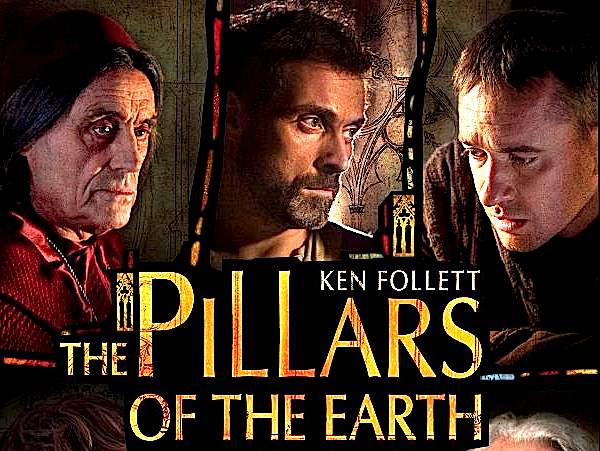

Finally, I just want to take this moment to appreciate the Pillars of the Earth miniseries. This is one of the best book adaptations I've ever seen, which is a tall order seeing as the book is so good. They actually improved on a few aspects - Tom and Ellen's slower courtship, William and Reagan's, er...relationship. And casting is spot on. Honestly, think about it - Tom Builder, Prior Phillip, Lord William, Aliena, Ellen, Waleran, Lady Reagan, even Agnes for Christ's sake - could any of them have been more perfectly cast?

But it's wrooong.....

Thursday, September 24, 2015

American Gods

Rating: 2.5 Stars

Either this is a bad book, or it went over my head. I hesitate to concede defeat, but I will admit that the literary techniques I never quite grasped are ambiguity and rambling. 

I was very excited to read American Gods. The premise is fantastic: Gods gain strength from human belief, therefore their power waxes and wanes with our worship. Thus the old gods - Norse, Greek, Native American - fight the new gods - Media, Drugs, Internet - for control of American minds.

It's neither adventure or fantasy novel, but rather a slow, meandering look at American society and human numbness. It has Cather in the Rye's gloomy atmosphere and The Stranger's simple, apathetic narration, yet whereas I adore the latter's portrayal of apathy, American Gods' is just confusing. I simply couldn't buy that the protagonist, Shadow, does not question any of the supernatural happenings about him. And by the time this is addressed several hundred pages into the novel, he's just lost his believably. Perhaps upon a second read, armed with the knowledge that the narrator is less interested in his story than the reader, I'll be able to appreciate it better. As is, I was frustrated with Shadow's ignorance, and consequently my own. I don't like ambiguity; please, give me the smallest hint as to where this story is headed.

I had no problem visualizing the present, the current scene, but seeing as the characters had either nonexistent or obscured motivations and the rules of this supernatural world were completely unclear, I could not visualize what would happen next. And I, as a reader, don't like that; there was no way to engage with this text.  I had not guarantee that it wouldn't just introduce another random character, or motivation, or rule, or story line, so I had no way to analyze the story as I read.

That being said, Niel Gaiman's prose is undoubtedly good. Simple, efficient, with unassuming analogies and symbols which dawn on you thirty seconds after you read them. And his characterization and descriptions sparkle. Moreover, although I had to drag the themes kicking and screaming from pages of unrelated narration, they weren't half bad. One statement repeated over and over is that America is a bad place for gods - and I thought that was an interesting point. America is a place of flighty passions and fleeting belief; our society is so turbulent, so diverse, so entrepreneurial, that firm and lasting belief in one object cannot sustain itself. And also Gaiman addresses belief itself - that on one hand our belief recklessly makes ideas powerful, just as it strengthens gods, but on the other hand an apathetic life devoid of belief is worthless. But don't get too excited, these interesting themes go virtually unaddressed in the meat of the story.

In conclusion, to further illuminate the conundrum that is this book, I present my turbulent thought process as I read:

1. Oh, cool! I really like this main character named Shadow. A regular guy in jail. The epitome of normal, calm, somewhat apathetic. He keeps his head down, and longingly dreams of the day he can go back to his wife. I like his characterization and physical description. Good narration. Good foreshadowing.

2. Awww his wife has died. That's unfortunate. A strong connection was established in the first 20 pages - good job for making me care.

3. Ok, a mysterious stranger offers the heartbroken man a job as his bodyguard. I dig it.

4. Wait. wat. His wife is alive???? A zombie? And he gets kidnapped by a kid in a limo? And dreams about a buffalo-man-god who gives him -WHY are you not QUESTIONING THESE THINGS, SHADOW.

5. Ok, so they're going to a house to.....? Right, recruit other gods. Ok, that makes sense. Interesting look at some Russian pagan gods.

6. WAIT Shadow has the power to make it snow with his mind. The story makes no further comment.

7. Who are all these people?! Why is he working as an undertaker?! I thought he was hired as a bodyguard???! WHY ARE YOU NOT ASKING ANY QUESTIONS, SHADOW. Literally, the man's like, "Gods exist. That's chill."

8. Oh. ok. So Shadow moved to a new town and now we get 50 pages of him meeting the townspeople and fixing his house up and taking part in small-town banter. I'm sure glad this is relevant.

9. Remember kids, having gay sex with a taxicab driver jinni will turn you into a jinni as well. I would tell you more, but this plot point is literally never followed-up on.

10. Oh, Shadow's employer died. I sure wish I knew who he was and what he wanted and why he was so obsessed with Shadow and why Shadow's blindly obeying him and in general what everyone is doing in this book. Really, if I knew those things I might have cared.

11. Soooo...he's going to sacrifice himself for his employer because his dead wife told him that he was so apathetic he might as well be dead. Ok, now this is more like it. I smell the inkling of a theme. He's going to die to feel more alive.

12.Cool death narration. So he's dead now, yes?

12. WHAT. IS. HAPPENING. Why did that woman reach into his brain?! Wait, so he's in the Egyptian underworld!? But he didn't believe in the Egyptian gods! What do you mean 'they believed in him'?! That's NOT HOW THE RULES of this universe work stop changing them! AND EXPLAIN WHAT IS HAPPENING PLEASE WHO ARE THESE PEOPLE AND WHAT ARE THEIR POWERS AND HOW DOES THIS ALL WORK!

13. WAIT SO THAT ONE GOD HAS THE POWER TO RAISE PEOPLE FROM THE DEAD?! THE FUCK , THAT WOULD HAVE COME IN HANDY EARLIER.

13. *sob* So there's a spring of water that will de-zombify people because.....?

14. Oh, it was all a con.

15. Ok. Ok. I guess that made sense? Except for...literally everything? I'm really slow. This was probably very deep.

Tuesday, August 25, 2015

The Killing Moon

Rating: 3.5 Stars

A refreshing fantasy book with good characters and fantastic world building.

I think the highlight of this book is without a doubt this complex magic system and extensive setting. It’s creative and detailed which makes it an attractive read for someone like myself who has seen too many cliché magical books in my time. It is one thing to set up a setting in an imaginary land with a king, an adversary, and a religion, but it’s whole other to create a multitier society with different, competing cultures that are both new and unique. There is tons of history that is just begging to be discovered and tastefully hinted at within the book. The level of detail is both admirable and incredible and makes for a great reading experience.

Not only is this background in-depth, but it’s also nothing I’ve ever seen before. I don’t think I’ve ever seen magic and dreams portrayed just this way. Like the author herself, I think I too was getting a bit tired of western magical systems. You know what I’m talking about; kingdoms, wizards, dragons, ivory towers, valiant knights, and maidens. This by comparison was a breath of fresh air.

The characters themselves were also pretty well-developed. Specifically, I liked Ehiru and Nijiri. I found their relationship to be quite intriguing and both had very interesting character psyches. I liked the devout religiousness Ehiru struggled with internally and Nijiri with his subtle complex was very interesting.

I think the book was written well and I like this author. I am aware that there are more in the series, Dreamblood, but I’m not sure if I'll go back and read the rest of it. Generally I don't like leaving series unfinished but, as of now, I don’t think I can make any promises.

Now the book wasn’t particularly humorous- which isn’t a necessity or anything. It just felt a bit like another fantasy book. And while the elaborate, wonderfully fresh setting and well-written prose makes it quite different from its neighbors in the science fiction genre, it still felt a bit like another fantasy book. For whatever reason, the book didn’t give me that twinkle in my eye.

I suppose I can bit picky; I have a very specific genre of books that I love. While I say I like fantasy, that statement might be a bit misleading. I have a particular favorite for urban magic, satirical humor, and overall cleverness. I abhor subpar writing and unlike my fellow reviewers, I do not have a soft spot for sagas. I don’t usually like journey type of books, so I am not overly fond of Tolkien. While many of the books I like fall under the science fiction category, spaceships are only slightly more tolerable than poorly constructed magical systems. However, if I were to be frankly honest, I just love a good story. The Book Thief or The Kite Runner may be works of fiction with no magic but I find them true works of art. Stiff: The Curious Lives of Human Cadavers is also another precious gem which happens to be nonfiction.

Overall, apologies for the ramble and in conclusion, it’s a good fantasy book that if you like reading, I’d suggest you give it a whack. It’s good.

Sunday, August 23, 2015

Good Omens: The Nice and Accurate Prophecies of Agnes Nutter, Witch

Rating: 4 Stars

They weren't kidding when they said that the Apocalypse has never been funnier.

One hell of a ride, Good Omens combines a fresh concept with superb wit. As a person who has a weakness for intelligent, witty prose, I was elated by the use of satirical footnotes. Even the list of characters before the book begins was hilarious. The humor is incredibly witty and snarky- a brand of humor that I have become partial to in my young adult life. The style, while teetering near the edge of sassy, is also, I find, distinctly British. And I’m not just talking about the accents of the various characters or that the story physically takes place in England; it’s the slight vocabulary used in dialogues, character description, and their actions. Since I am slightly less familiar with British writing, it took a bit for me to get in the groove- but it is because of this difference that made the book more suspenseful and unexpected for me. Even though the characters could feel a bit distant and disjointed at times, they were still fascinating to read.

In terms of prose, the book is written well. It has a good flow that I became accustomed to and kept the plot moving fairly well. However, there were times where I felt that the characters were a little blank. At moments, characters seemed to act more like objects or vehicles to move the plot forward. Besides the two main protagonists, Crowley and Aziraphale, sometimes everyone else seemed more like walking archetypes. That being said, I can understand that in many ways many of them were supposed to be satirical in nature. Even so, it still felt like they were just an inch from hitting their mark.

What really made this work stand out from amongst others was the amusing commentary and, of course, the brilliant interpretation of the Apocalypse. Just the preface itself was phenomenal. However, while the initial idea and beginning was very strong, the climax and subsequent ending felt a little rash and lackluster.

One aspect that also deserves mentioning is the ingenious portrayal of heaven, hell, and the Four Horsemen. Not only does the book subtly suggest what the afterlife and a preordained destiny might mean, but it also makes you reevaluate what 'good' and 'bad' really comes down to. This, above all else, is why I think it deserves four stars. Very few books can create a new, creative plot with entertaining protagonists and witty humor all accompanied by larger, insightful themes.


Lastly, it is impossible to walk away from the book without feeling inspired by the teamwork of these two brilliant authors. Their cooperation, friendship, work ethic, and enthusiasm is remarkable and should be revered by all aspiring author duos. Had I remembered where I left my hat, I'd tip it to them. I'll definitely be dipping my toes into both of their other works in the future.

Friday, August 21, 2015

Empire of the Sun


Rating: 3.5 Stars

Everything good about this movie is to be found in its main character, Jim, played by a 14-year-old Christian Bale. Christ, is this boy a good actor. He has a good 80 percent of the screen time and frankly I think that's 20 percent to little. He's energetic, he's natural, he's touchingly emotional; he grins, cries, crawls, yawns, and stares in character, and easily makes it to my top 3 favorite performances by a child. Perhaps number one.

As a historical movie, Empire also presents a fresh perspective. Frightened, huddled Westerners are herded about by powerful, corrupt Japanese, a pleasant reversal from Hollywood's tendencies to typecast minorities as history's victims. And frankly I learned a lot about the Pacific theater of WWII, Japanese occupation of China, and English internment.

I have one main visual qualm:

I love historical movies. I love artistic movies. I hate when the two are shoddily intertwined - key word shoddy. To illustrate, toward the end of the movie the camp survivors are ushered into an abandoned stadium full of looted furniture. They wander about, malnourished and frail, among these reminders of their former opulence. Visually it's interesting, but story-wise it's so devastatingly distracting, as if the movie expects bonus stars for being mysterious and artsy.


To illustrate this point, I turn to another one of Spielberg's war movies Saving Private Ryan, which perfectly blends cinematic beauty with visual historical honesty. While Empire gets it right most of the time (ie. the plane attack), the moments it doesn't are highly jarring.

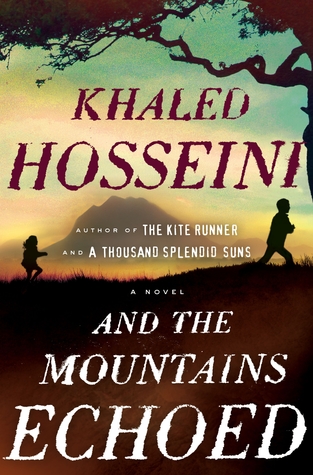
And the Mountains Echoed

Rating: 1.5 Stars

I have committed reader's felony.

I started this book. And kept reading. And kept reading. And kept reading. And kept reading.....But by god, I now refuse to finish it. So I pray to god this review gives me the closure and absolution sought by all non-book-finishers.


I did not, mind you, throw it aside in revulsion or frustration. By all accounts this should be a good book - intertwined storylines, exotic locations, character growth, redemption. No one particular aspect jarred me. My enthusiasm and interest simply fizzled out until I had neither left, and frankly, this situation is probably more telling about me as a reader than this novel.

I went into it with incredibly high hopes and expectations. Khaled Hosseini, after all, brought us both The Kite Runner and A Thousand Splendid Suns, and I was expecting more of the same brilliance. But here is where And the Mountains Echoed fell hopelessly flat for me

1. It follows several characters and arcs. Fine. They're all intertwined in some way. Fantastic. Little nuggets of one story show up in the others. A+. However, all in all this was a collection of short life summaries. There was very little actual dialogue and action, each chapter rather summarizing a good 40 years of one person's life. As a result, Mr. Hosseini often reverted to telling, not showing, and we all know that's a fantastic mode of vivid storytelling.

2 Khaled Hosseini excells in writing about children. So why, oh god why, did he choose to write a good portion of this book from the point of view of 70 year olds. Don't misunderstand, I have nothing against older characters (ie. a certain old man....on the sea....), but I generally dislike this brand of 'reminiscent nostalgia' stories. If you want to tell me the story of a child, tell it through his eyes, otherwise you lose the imagination and innocence intrinsic to a child's POV. There was one portion about two children - two boys - and I immediately perked up....until it ended 10 pages later. But that little nugget was in and of itself was a breath of fresh, Kite Runner-esque air.

3. Some of the stories are just plain bad. It's not like they're boring, it's just that they're....very boring. I just don't care. I don't care about your mother's new intellectual boyfriend that your 13-year-old mind is secretly in love with. I don't care about your edgy poetry and suicidal tendencies. I don't care about your completely original struggle to find your long lost aunt because you feel a connection and won't be complete without her. There is only one story line I truly appreciated - the disfigured girl and her caretaker. The rest were just large piles of .klasldkjoshfnasdfj??/.

That is all. Perhaps my wearied conscience can now find peace when I never pick this book up again.

Saturday, June 27, 2015